
Solar Panel

Best Solar Company in Roorkee
Solar Panel

Best Solar Company in Roorkee: How to Choose the Right Solar Installer

Best Solar Company in Roorkee: How to Choose the Right Solar Installer Choosing the Best Solar Company in Roorkee starts with looking beyond the quoted price. Two installers can offer the same system capacity while supplying different equipment, installation standards and after-sales support. A lower quotation is only useful when you understand what it includes. Before committing, check how the installer assesses your roof, explains the equipment, estimates savings and handles service after installation. This guide covers the documents to request, the differences worth comparing and the questions that help you choose a solar installation partner with confidence. How Do You Choose a Reliable Solar Installer? Choose a solar installer who surveys your roof, recommends capacity based on electricity usage, provides an itemised quotation and explains warranties in writing. Ask for completed local projects, clarify responsibility for approvals and confirm who handles service requests. Compare these details before deciding on price, and get important commitments recorded in your agreement. Seven Checks Before You Select a Solar Company 1. Ask for Relevant Local Projects Request examples from Roorkee or nearby locations, preferably with a roof type and electricity requirement similar to yours. Ask for installation photographs and, with the customer’s permission, a reference conversation. Find out whether the team communicated clearly, finished the agreed work and responded to problems after receiving payment. 2. Expect a Proper Roof Assessment A useful survey checks usable space, shadows from tanks or neighbouring buildings, roof condition, mounting arrangements and maintenance access. Discuss drainage and how mounting work will protect waterproofing. The recommendation should also consider electricity consumption and daytime usage; a large terrace alone does not justify a larger system. 3. Get Equipment Details in Writing “Premium panels” tells you little. Ask for panel and inverter manufacturers, exact model numbers, quantities, rated capacities and datasheets. Make sure the quotation identifies what will actually be supplied. If substitutions become necessary, require your written approval before installation rather than accepting an unspecified “equivalent” product. 4. Check the Subsidy Route Before Ordering For eligible residential installations under PM Surya Ghar, use the official portal process and verify the vendor’s registration before proceeding. Government guidance requires a registered vendor for installations seeking central assistance. Registration alone does not establish your eligibility; confirm the requirements applicable to your connection and proposed system. 5. Separate Equipment Price From Complete Project Cost Request an itemised scope covering mounting structures, wiring, earthing, electrical protection, installation labour and commissioning. Check taxes, metering-related charges and any separately priced civil work. If additional cabling or roof repairs become necessary, agree how those costs will be approved before work begins. 6. Read Each Warranty Separately Panel product warranties address specified defects; performance warranties concern output over time under stated conditions. Inverter warranties and installation workmanship coverage are separate. Request the actual terms, exclusions and claim procedure. Establish who coordinates replacements and whether inspection visits, transport or labour could cost extra. 7. Establish Who Will Provide Service Ask for a named service contact, written maintenance scope and realistic response expectations. Clarify who checks generation problems, whether cleaning is included and how complaints escalate. A claim of “local support” should come with an explanation of who can visit your property and how a visit is arranged. How to Compare Solar Installation Quotations Compare the same system scope before comparing the final amount. The lowest quote may cover less work, use different equipment or exclude charges that appear later. Ask each provider to complete the same comparison, with missing details clarified in writing. Compare What the quotation should specify Capacity and design Panel capacity, inverter rating and the reasoning behind system size Equipment Manufacturers, model numbers, quantities and datasheets Mounting and roof work Structure specifications, fixing method and any civil-work exclusions Electrical installation Cable scope, earthing, protection, testing and installation labour Approvals and metering Who coordinates each step and which charges are included Total payable amount Taxes, exclusions, payment stages and price before any expected subsidy Warranties and service Separate coverage terms, claim contact and possible service charges A more expensive proposal should explain what the additional cost buys. Conversely, a cheaper offer deserves consideration when its equipment, installation scope and support are genuinely comparable. Keep expected assistance separate from the upfront payment schedule so you know what you must pay and when. Questions to Ask Before Paying an Advance Take these questions into your sales conversation and ask the installer to answer against your property’s requirements: Why is this system size suitable for my electricity usage? What does the final price include, and what remains excluded? Will this proposed system provide power during outages? Who handles portal submissions, inspections and metering coordination? What could delay installation or commissioning, and who will update me? Who will resolve an equipment fault after installation? Which invoices, equipment details, commissioning documents and warranty records will I receive? Ask for these answers in the proposal or agreement. Written responsibilities are easier to refer back to than assurances made during a call. Warning Signs You Should Not Ignore Pause and seek clarification if an installer offers: A final system recommendation without reviewing your roof or electricity consumption. Guaranteed zero bills or fixed savings without showing the calculation and assumptions. Assured subsidy payments without checking eligibility and the required application process. Unnamed equipment, unspecified models or warranty promises available only verbally. Pressure to pay before providing a written scope and payment schedule. No clear service contact or route for escalating unresolved complaints. Confident sales claims should be supported by documents, reasonable assumptions and clearly assigned responsibilities. Considering Greeny Solar for Your Roorkee Property Greeny Solar Energy lists Roorkee among its service areas and describes support spanning site inspection, installation, application assistance and maintenance. That makes it an option to assess using the same checks above. Ask the team for a relevant project example showing its location, capacity and installation photographs. Request a documented assessment, an itemised proposal, equipment specifications and written warranty terms. Confirm which application tasks and after-sales services are included for your address.
Solar Panel Installation in Haridwar
Solar Panel

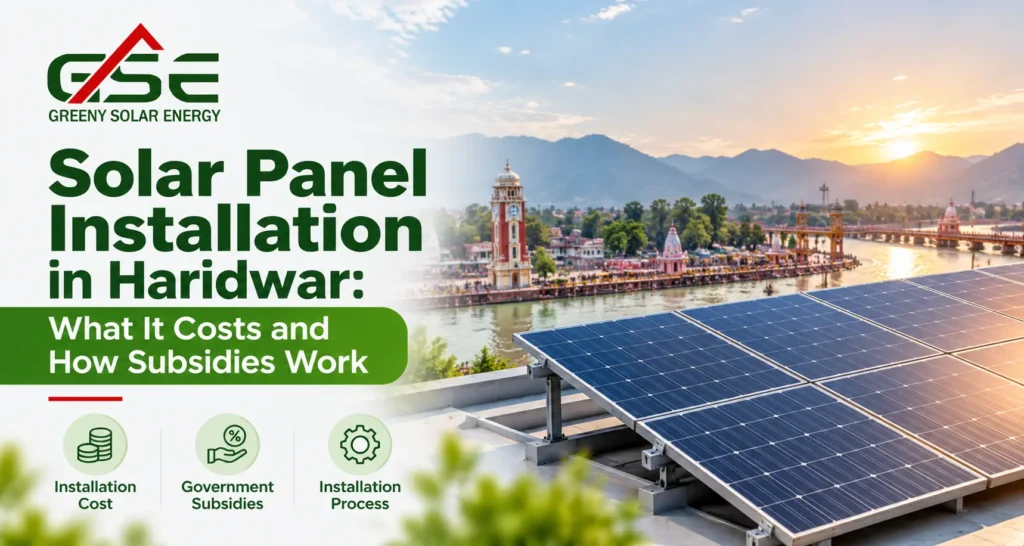
Solar Panel Installation in Haridwar: What It Costs and How Subsidies Work

Solar Panel Installation in Haridwar: What It Costs and How Subsidies Work When you start comparing solar quotes, you’ll often find two prices for the same system: the installation price and a much smaller figure labelled “after subsidy.” Before choosing either, find out what you’ll pay upfront, what the installation includes and which subsidies you’re eligible to receive. For solar panel installation in Haridwar, a basic 3 kW on-grid system has an indicative price of ₹1.65–₹1.85 lakh before subsidies. The final amount depends on the panels, inverter, mounting structure and work your roof needs. Eligible households can apply for central assistance through PM Surya Ghar, while Uttarakhand offers additional state support under its applicable conditions. A roof assessment helps bring these numbers into focus. It tells you whether the proposed system fits your home—and whether the quote leaves anything out. How Much Does Solar Panel Installation in Haridwar Cost? For an on-grid residential system without batteries, these published Uttarakhand price estimates provide a useful starting point: Solar System Size Estimated Price Before Subsidy 1 kW ₹60,000–₹70,000 2 kW ₹1,15,000–₹1,30,000 3 kW ₹1,65,000–₹1,85,000 5 kW ₹2,60,000–₹2,90,000 These are planning estimates, not fixed rates. The equipment selected and the complexity of your installation can move the price outside these ranges. The quotation should cover the panels, inverter, mounting structure, cables, earthing, electrical protection and installation labour. It should also say whether GST, transport, metering charges and application assistance are included. Pay particular attention to the structure. If you want to keep the terrace usable beneath the panels, a raised installation may cost more than a standard mounting arrangement. Roof repairs, long cable routes, electrical upgrades and battery backup can add to the bill too. Ask for one complete price with the extras listed separately. That makes comparing two installers much easier than comparing their advertised “starting prices.” What Solar Subsidies Are Available in Haridwar? Haridwar homeowners with eligible residential electricity connections can apply under PM Surya Ghar: Muft Bijli Yojana. Because Uttarakhand falls within the scheme’s special-category states, its central assistance is higher than the ₹78,000 maximum commonly quoted for other states. System Size Central Subsidy 1 kW ₹33,000 2 kW ₹66,000 3 kW ₹85,800 5 kW ₹85,800 Central support stops increasing after 3 kW, so installing 5 kW does not bring a larger central subsidy. Uttarakhand’s published state scheme provides a further ₹17,000 per kW for 1–3 kW systems, with ₹51,000 for systems from 3–10 kW. A qualifying 3 kW household receiving both components could therefore receive ₹1,36,800 in combined assistance. Confirm the state claim requirements with UREDA before treating that amount as part of your budget. To qualify, your application and installation must meet the scheme’s requirements. These include an eligible domestic connection, suitable roof access, a registered vendor and compliant equipment. Subsidised systems must use Indian-made solar modules manufactured with domestic cells; disclose any previous solar subsidy when checking eligibility. Apply through the official PM Surya Ghar portal. For local guidance, use UREDA’s scheme resources and UPCL’s Solar Cell documents. Remember that assistance is generally claimed after installation and commissioning under the standard purchase route. Your payment agreement should explain what you need to arrange upfront. Which Solar System Size Is Right for Your Home? Your electricity bills are a better starting point than your house size. Two homes with the same number of rooms can use very different amounts of electricity. Look at the units consumed over the last 12 months, rather than the rupee amount on one bill. This captures both heavy summer usage and quieter months. As an initial estimate, a system producing four units per day per kW would generate around 120 units monthly per kW. At that assumed output, a home averaging 360 units a month could consider 3 kW. Your installer should then refine the estimate for the roof’s orientation, shading and seasonal conditions. Roof space is the next check. Allow roughly 10 square metres of shadow-free space per kW as a starting guide. For 3 kW, that means about 30 square metres, with the final layout accounting for water tanks, staircase rooms and access for maintenance. Think about when you use electricity, too. Daytime loads can use solar generation directly, while surplus generation and electricity drawn at night are accounted for through the applicable metering arrangement. If your main concern is power cuts, mention that before requesting a quote. A standard on-grid system shuts down during an outage. Backup needs a suitable inverter, battery and safe changeover arrangement, sized around the appliances you want to keep running. Solar Panel Installation Process in Haridwar Get the roof surveyed. The installer reviews your bills, checks shading and roof condition, and works out where the panels, inverter and cables will go. Submit the application. Register on PM Surya Ghar with your electricity consumer details. Complete the applicable UPCL approval requirements before installation begins. Finalise the equipment and price. Choose a registered vendor and confirm the component models, installation scope, payment stages and warranties in writing. Install the system. The team fits the structure, panels, inverter and electrical protection, then tests the installation. Complete inspection and metering. Plant details are submitted, the net meter is requested, and UPCL carries out the required inspection and commissioning formalities. Claim the applicable subsidies. Submit bank details and the required documents through the national portal after commissioning. Check the separate state-subsidy procedure with UREDA and keep the central approval or payment records. Before handover, collect your invoice, warranty documents, equipment serial numbers and commissioning records. Ask the installer to show you how to check generation and report a fault. What Should You Check Before Choosing an Installer? Start by verifying the vendor’s registration on the PM Surya Ghar portal for your location. Then look closely at what the business is willing to put in writing. A complete quotation: Equipment, taxes, installation work and exclusions should be easy to identify. Named components: Ask for exact panel and inverter models, their specifications and scheme-compliance documents. Workmanship cover: Find out who pays

Solar-panel-installation-in-haldwani
Solar Panel

Solar Panel Installation in Haldwani: Cost, Government Subsidy & Installation Process

The cost of Solar Panel Installation in Haldwani depends on system capacity, equipment and rooftop conditions, so a dated, itemised quotation is essential. Eligible residential customers in Uttarakhand can receive central assistance of up to ₹85,800 under PM Surya Ghar. Before deciding, compare the full installation price, your household’s electricity consumption and the amount payable before subsidy arrives—not just the advertised price after assistance. How Much Does Rooftop Solar Installation Cost in Haldwani? A meaningful price comparison starts with the same scope of work. Two systems of identical capacity can cost differently because of inverter specifications, mounting height, cable runs and roof repairs. Pricing status, checked 20 October 2026: A current, dated Greeny Solar residential quotation was unavailable for verification. The table therefore shows how to calculate your net investment once the company provides its installed price. System capacity Installed price before subsidy Eligible central assistance* Cost after central assistance* 1 kW Request itemised quote ₹33,000 Quoted total − ₹33,000 2 kW Request itemised quote ₹66,000 Quoted total − ₹66,000 3 kW Request itemised quote ₹85,800 Quoted total − ₹85,800 5 kW Request itemised quote ₹85,800 Quoted total − ₹85,800 For qualifying residential installations; subject to approval. State assistance is excluded. Ask whether the quotation includes GST, panels, inverter, mounting structure, wiring, earthing, protection devices, installation and metering charges. Inclusions cannot be assumed without the quotation. Keep battery storage, roof strengthening and additional civil work separately priced. Also check quotation validity, payment milestones and maintenance coverage: a low headline figure is useful only when you know what it buys. What Government Subsidy Can Homeowners in Haldwani Get? Uttarakhand qualifies for special-category central assistance under PM Surya Ghar. The applicable rates are ₹33,000 per kW for the first 2 kW and ₹19,800 for the next kW. That totals ₹85,800 for 3 kW; larger eligible systems receive no additional central assistance beyond this ceiling. The residential system must meet scheme requirements, including a qualifying grid-connected domestic electricity connection and modules manufactured in India using domestically manufactured cells. Commercial connections do not receive this residential subsidy. Start through the PM Surya Ghar portal. Keep your electricity consumer details, mobile number and required identity documents ready; bank details and a cancelled cheque are required for the subsidy claim. Use a registered vendor and follow the applicable approval and commissioning process. Subsidy is not an automatic upfront discount. State assistance is separate. Uttarakhand’s published 2023 scheme booklet records ₹17,000 per kW up to 3 kW, capped at ₹51,000 for systems from 3–10 kW. Current availability for new applications was not conclusively verified; obtain confirmation from UREDA before deducting it from your budget. Which Solar System Size Is Right for Your Home? Start with monthly consumption in units, using roughly 12 months of bills to capture seasonal changes. Then assess usable roof area, shade from trees or neighbouring buildings, and future demand from additional ACs or an electric vehicle. Illustrative example: Assume a household consumes 300 units monthly and its roof can support generation of 120 units per kW per month on an annual-average basis. A 2.5 kW system would theoretically match that average demand. This is a planning assumption, not a generation guarantee; seasonal output and bill savings will differ. An on-grid system suits electricity-bill reduction. If backup matters, specify essential appliances and required backup hours so the installer can assess a suitable battery-backed design. How Does the Solar Installation Process Work? A well-managed Solar Panel Installation in Haldwani should follow a documented sequence, with responsibilities agreed before payment: Assess the bill and roof. Review consumption, connection details, shading, structural suitability and access. Identify existing leaks before mounting equipment. Prepare the design and quotation. Specify panel layout, inverter, mounting arrangement, safety equipment, expected generation and all exclusions. Complete portal and DISCOM formalities. Register through the national portal, select a registered vendor and complete the applicable UPCL requirements before proceeding. Install the system. Fit the structure, panels, inverter, wiring, earthing and protection equipment. Preserve roof drainage and safe maintenance access. Arrange metering and commissioning. Submit installation details and complete the required metering, inspection and commissioning steps with UPCL. Claim subsidy and receive handover. Submit the required bank information and retain commissioning records, invoices, warranties, monitoring access and service contacts. Physical installation is only one part of the schedule. Ask for separate dates for rooftop work, inspection and commissioning; paperwork corrections, meter availability and roof preparation can affect completion. How to Choose the Best Solar Company in Haldwani Choose a provider that makes its proposal easy to verify. Check: Current registration applicable to your subsidy application. An itemised quotation with equipment makes and models. Mounting, waterproofing and electrical-safety workmanship. Separate panel product, performance and inverter warranties. Local service arrangements and genuine completed projects. Greeny Solar Energy lists an office at Dewalchaur Chauraha, Rampur Road, Haldwani, and describes rooftop installation, site assessment and maintenance among its services. When evaluating its Solar Panel Installation Service in Haldwani, request a site-specific proposal, relevant project references and written after-sales responsibilities. These provide stronger evidence than broad claims about savings or market leadership. Frequently Asked Questions Can rooftop solar power my home during a power cut? A standard on-grid system cannot. It shuts down when grid power fails to prevent unsafe electricity export. Backup requires compatible equipment designed for isolated operation, with appropriately sized storage where sustained supply is needed. Can I install solar panels on an existing house? Yes, if the roof is suitable. Check structural condition, waterproofing, shade, ownership permissions and available space first. An older house may need repairs or strengthening before the mounting structure and panels can be installed safely. How long does installation and commissioning take? The timeline depends on site readiness and approvals. Rooftop work and commissioning are separate stages. Request a written schedule covering equipment delivery, installation, metering and inspection rather than treating the installation date as the final completion date. Will rooftop solar completely eliminate my electricity bill? Not necessarily. Your bill depends on consumption, generation, applicable fixed charges and export-settlement rules. A

best-solar-company-in-dehradun
Solar Panel

Best Solar Company in Dehradun: A Practical Buyer’s Guide

The best solar company in Dehradun for your property is one that can explain its system design, provide a complete written quotation and take clear responsibility for installation and support. Compare evidence of similar work, equipment specifications, roof suitability, approval responsibilities and warranty terms before comparing the final price. Greeny Solar Energy publishes this guide as a solar provider. It is intended to help homeowners and business owners assess any installer—including us—using the same practical questions. Whether you are planning a small residential rooftop system or solar for a business, begin with your electricity use and the building itself. What makes a solar company the right choice in Dehradun? A useful first meeting should leave you with a clearer understanding of your property, rather than just a recommended panel brand. Ask for examples of installations similar to yours. A residential terrace, a metal-roof warehouse and a hotel with substantial evening demand present different challenges. Request the installation date, system capacity and photographs that show the mounting, wiring and inverter location. If savings are discussed, ask for the period covered and supporting generation records or electricity bills, with customer permission. Establish what the company actually does. A manufacturer makes equipment; a dealer sells it; an installation or EPC provider takes on engineering, procurement and construction. One business may perform several roles. Your agreement should name the business responsible for the completed installation and subsequent service. Finally, ask how the survey becomes a proposal. You should be able to trace the recommended capacity back to consumption, usable roof space and connection requirements. A company that explains these trade-offs gives you something meaningful to compare. How to compare solar quotations properly Ask two or three installers to quote against the same requirement. Comparing only the headline kW figure can hide differences in equipment, structure, electrical work and service. What to Check in a Solar Installation Quotation Item What to verify Why it matters Solar panels Manufacturer, exact model, quantity, individual wattage and total DC capacity A brand name alone does not identify the equipment you will receive. Inverter Model, AC capacity, warranty, monitoring and service arrangements Inverter capacity and panel capacity are different figures; both need explaining. Mounting structure Material, corrosion protection, height, attachment method and civil-work scope Structure design affects the roof, accessibility and project price. Electrical installation Earthing, isolation, surge protection, cable specification and routing Essential installation work should not become an unexplained extra. Approvals and metering Who submits documents, arranges testing and pays applicable charges Application support and authority approval are separate responsibilities. Commissioning and handover Test records, drawings, serial numbers, manuals and monitoring access You need a usable record of the system you own. Workmanship and maintenance Coverage period, visit arrangements, exclusions and claim contact Equipment warranties do not describe every service obligation. Total payable amount Taxes, transport, civil work, metering and all exclusions The lowest initial figure may not be the lowest complete price. A hypothetical comparison: Two quotations both say “5 kW”. One includes a raised structure and metering coordination; the other leaves both unpriced. Ask each installer to price the same scope before deciding which offers better value. This example illustrates comparison only; it is not a Greeny quotation or project. Also require written approval before equipment substitutions. “Equivalent model” should trigger a revised specification, rather than an unexpected change on delivery day. What affects solar installation cost in Dehradun? Solar installation cost in Dehradun depends on the complete system and the work your building needs. A 3 kW, 5 kW or 10 kW label is insufficient to establish an installed price. The main cost components are panels, inverter, mounting structure, electrical protection, cabling, labour, transport and applicable taxes. Roof repairs, structural strengthening, difficult access, longer cable runs, batteries and changes to the electrical connection can add to the total. Ask for three separate amounts: the gross installed price, any assistance for which the project may qualify, and the payments due at each project stage. Subsidy should not obscure how much you must arrange before commissioning. A useful quotation also has a validity date. If installation will happen later, establish whether the equipment and price remain available and what happens if either changes. How should the right system size be calculated? Start with approximately 12 months of electricity consumption in units, or kWh. A rupee bill includes charges that do not translate directly into electricity use. Review seasonal demand, daytime use, future appliances, roof conditions and the applicable connection limits. Ask for a monthly generation forecast with its assumptions. It should account for the proposed layout and losses, rather than multiply capacity by an unexplained daily output. For a business, operating hours and holidays also matter. Treat payback as a calculation to inspect. The proposal should explain the installed cost, electricity used on-site, export treatment, maintenance allowance and any financing assumptions. Ask what happens to the result if generation is lower than forecast. Fixed or demand charges may remain even when electricity purchases fall. On-grid, off-grid or hybrid: which system fits your needs? Choose the configuration around your main requirement: reducing grid purchases, supplying a property without dependable grid access, or supporting selected appliances during outages. On-Grid, Off-Grid and Hybrid Solar Systems System Main purpose Battery and outage considerations On-grid Generate electricity alongside an existing grid connection A standard battery-free system shuts down during grid failure; it does not provide household backup. Off-grid Supply loads independently of the utility grid Usually needs storage and careful load planning. Available power depends on generation, stored energy and inverter capacity. Hybrid Combine solar, grid supply and compatible storage Backup requires suitable equipment, isolation and designated circuits. The label alone does not guarantee whole-building backup. Standard grid-connected inverters shut down when the grid fails for safety. The national rooftop-solar technical guidance explains this anti-islanding requirement. For backup, give the installer an appliance list and the hours each appliance must operate. Fans, lights and a router present a different requirement from air conditioners, pumps or kitchen equipment. Ask for usable

Solar Panel

Commercial Solar Panels in Uttarakhand: Installation Cost, Benefits, Savings & ROI

Commercial Solar Panels in Uttarakhand can help businesses reduce daytime electricity purchases and control long-term operating costs. The investment depends on system capacity, roof conditions, equipment, consumption patterns and the applicable metering arrangement. Start with your electricity bills and usable rooftop space—not simply the largest system your roof can accommodate. For hotels, schools, hospitals, factories, warehouses and retail establishments, the key question is how much solar electricity the business can use, and what that electricity will actually save. How Much Does a Commercial Solar System Cost? Published indicative turnkey prices from an installer serving Uttarakhand range from ₹4.5–₹5.5 lakh for 10 kW to ₹38–₹45 lakh for 100 kW, checked on 29 September 2026. These are supplier estimates, not fixed statewide rates or a Greeny Solar Energy quotation. Infinite Solar Solutions System capacity Indicative turnkey price* Approximate roof allowance 10 kW ₹4.5–₹5.5 lakh 100 m² 25 kW ₹10.5–₹12.5 lakh 250 m² 50 kW ₹20–₹24 lakh 500 m² 100 kW ₹38–₹45 lakh 1,000 m² The supplier does not explicitly confirm whether GST, metering charges and approval fees are included. Obtain an itemised quotation before treating these figures as the complete investment. Infinite Solar Solutions Roof allowances use the national portal’s general guideline of approximately 10 m² per kW. Actual requirements depend on panel efficiency, spacing, access and shading. solarrooftop.pmsuryaghar.gov.in Your quotation should specify panels, inverter, mounting structure, cabling, earthing, protection and installation. Roof strengthening, difficult access, batteries and additional civil work can change the budget considerably. What Benefits Can Businesses Expect? The clearest benefit is replacing purchased electricity with solar power during operating hours. Lower electricity purchases: Supply daytime equipment, lighting, cooling and other suitable loads. More predictable expenditure: Reduce exposure to tariff increases for the electricity supplied by solar. Productive rooftop use: Turn suitable unused space into an electricity-generating asset. Support for sustainability goals: Track renewable generation and its contribution to business electricity consumption. A daytime office or factory may use a larger share of generation immediately. A hotel with substantial evening demand needs a closer comparison of daytime consumption, export credits and any proposed battery investment. How Much Can You Save—and What Is the Payback Period? Savings depend on usable generation and the electricity charges it offsets. System capacity alone cannot establish a credible payback period. Consider this illustrative 25 kW example, not a quotation or generation guarantee. Assume an unshaded Dehradun rooftop produces 35,000 units annually after temperature, inverter, wiring and other operating losses. A site-specific simulation must validate that assumption. Calculation input Illustrative assumption Complete upfront investment ₹12.5 lakh, including GST, installation, metering and approvals; no battery Annual generation 35,000 units, equivalent to 1,400 units per kW Electricity used on-site 90%: 31,500 units Avoided energy charge Assumed ₹8/unit: ₹2,52,000 annually Exported electricity 3,500 units; assigned ₹0 pending confirmed settlement terms Annual operating expenses ₹15,000 maintenance and recurring-cost allowance Net annual savings ₹2,52,000 − ₹15,000 = ₹2,37,000 Simple payback = upfront investment ÷ net annual savings ₹12,50,000 ÷ ₹2,37,000 = approximately 5.3 years. Payback measures recovery time; ROI measures return relative to investment. Neither this calculation nor the assumed tariff accounts for financing, tax effects, degradation or future equipment replacement. Confirmed export credits could improve this example. Lower generation or self-consumption would weaken it. Fixed or demand charges may remain, so a generation percentage is not an equivalent total-bill saving. Commercial Solar Panel Installation in Uttarakhand: Step by Step A sound installation begins with consumption analysis and ends with verified performance. Review electricity use: Examine 12 months of bills, daytime demand, seasonal changes and sanctioned load. Inspect the roof: Assess structural condition, usable space, shadows, drainage and safe maintenance access. Prepare the proposal: Specify system capacity, equipment, expected monthly generation and an itemised project price. Arrange permissions and installation: Complete applicable utility requirements, install the system and arrange approved metering. Commission and monitor: Test electrical protection, document handover and establish generation monitoring and maintenance responsibilities. In hill locations, surrounding slopes, trees, restricted roof access and structural requirements can affect both output and installation cost. A nearby project’s design should never replace an assessment of your own building. Improve Long-Term Cost Predictability Can commercial solar actually reduce electricity costs for businesses? Yes. When a system is correctly sized and the property has suitable daytime demand, solar can replace part of the electricity normally purchased from the grid. The actual reduction depends on tariff, system size, sunlight, operating hours, consumption pattern and system performance. The important point is that savings are not determined by panel count alone. How and when the business consumes electricity matters just as much. What Should You Know About Subsidies and Net Metering? Do not deduct a residential subsidy from a commercial project’s price. PM Surya Ghar’s residential consumer assistance does not establish eligibility for a commercial electricity connection. mnre.gov.in Check any separate incentive against UREDA’s applicable scheme conditions. Before ordering equipment, obtain written confirmation of: The metering arrangement available for your connection. Permitted capacity and technical feasibility requirements. How exported units are credited and surplus is settled. Required applications, agreements, inspections and charges. UREDA publishes solar-policy resources; UERC lists regulations and amendments; UPCL publishes implementation and tariff circulars. Use the provisions applicable to your project and commissioning date rather than assuming exported electricity receives the retail rate. India How Do You Choose the Right Solar Installation Partner? Searching for the Best Solar Company in Uttarakhand? Compare documented commercial projects, transparent quotations, equipment warranties and the assumptions behind projected savings. The lowest price becomes less attractive if it excludes essential protection, structural work or dependable service. Ask who handles approvals, monitors underperformance and responds when the inverter stops generating. Greeny Solar Energy offers residential and commercial solar installation services. Request a proposal that connects the recommended capacity to your business’s actual consumption, with clear equipment specifications, exclusions and maintenance responsibilities. greenysolar.in Frequently Asked Questions What size solar system does my business need? Size it around daytime electricity consumption, usable roof space and permitted connection capacity. Review seasonal bills and operating hours; choosing capacity from the monthly

Best Solar Company in Haldwani for Businesses
Solar Panel

Best Solar Company in Haldwani for Businesses: Commercial Solar Solutions That Reduce Energy Costs

For a business, electricity is part of the cost of keeping the property running every day. Offices need lighting, computers and cooling. Hotels, clinics, schools, showrooms and workshops each have their own pattern of power use. That is why commercial property owners are looking more seriously at rooftop solar. It can generate electricity during the same daytime hours in which many businesses are operating, reducing the amount of power bought from the grid. If you are comparing the Best Solar Company in Haldwani for Businesses, the useful question is whether the provider can design a system around your actual consumption, roof and operating needs. Greeny Solar Energy works with both commercial and residential solar requirements in Haldwani. Why Are Businesses in Haldwani Switching to Solar? A school may consume most of its power between morning and afternoon. Offices and showrooms often have steady daytime loads. Hotels, hospitals and restaurants have more varied demand, but a meaningful share can still fall during solar-generation hours. Rooftop space is another factor. Many commercial buildings have terraces that do not contribute to day-to-day operations. If a roof has enough usable area, limited shading and suitable structural conditions, it may be able to generate electricity without taking away business floor space. For a business, this changes the way the roof is viewed. Instead of remaining unused, suitable rooftop space can help meet part of the property’s regular electricity requirement. How Commercial Solar Helps Reduce Business Energy Costs Commercial solar reduces electricity costs by replacing part of the power a business would otherwise draw from the grid. Generate Electricity During Business Hours Solar panels produce during daylight, which lines up well with the operating hours of many commercial establishments. If a business has a strong daytime load, electricity generated on the roof can be used within the property as it is produced. Two similar buildings can still get very different value from solar if their usage hours differ. This is why working hours matter when a commercial system is being planned. Reduce Dependence on Grid Power A solar system does not have to cover the property’s entire electricity requirement to be useful. In many cases, the practical goal is to offset a suitable portion of regular consumption while the grid continues to supply the rest. This is why system sizing should begin with electricity bills and usage patterns, not with a standard package or whatever capacity happens to fit on the roof. Improve Long-Term Cost Predictability Can commercial solar actually reduce electricity costs for businesses? Yes. When a system is correctly sized and the property has suitable daytime demand, solar can replace part of the electricity normally purchased from the grid. The actual reduction depends on tariff, system size, sunlight, operating hours, consumption pattern and system performance. The important point is that savings are not determined by panel count alone. How and when the business consumes electricity matters just as much. Which Businesses Can Benefit from Commercial Solar in Haldwani? Commercial Solar Solutions in Haldwani can be relevant for: Hotels and resorts Schools and educational institutes Hospitals and clinics Offices Retail stores and showrooms Warehouses Manufacturing units Restaurants and cafés Commercial buildings The business category alone does not decide suitability. A smaller office with a clear roof and steady daytime usage may be a better candidate than a larger building with heavy shading or little usable roof area. The question is not simply whether a business can install solar. It is whether its electricity use and property conditions make the proposed system worthwhile. How Is the Right Commercial Solar System Selected? A good commercial solar proposal should be built from the property’s data, not from a pre-decided kW figure. Electricity Consumption Analysis Recent electricity bills show how much power the business uses and whether consumption changes across seasons. Operating hours matter too, along with major loads such as cooling, pumps, refrigeration, machinery or kitchen equipment. Future expansion should also be discussed because current bills may not represent future demand. If a business expects to add equipment, rooms, workstations or another operating area, that information should be considered before finalising the system. Rooftop Space and Site Assessment Total roof area and usable solar area are rarely the same. Water tanks, staircases, access paths and shadows can reduce the space available for panels. A site visit should also consider mounting conditions, inverter location, cable routes and maintenance access. This is one of the reasons a capacity should not be recommended only from an electricity bill or a rooftop photograph. A physical assessment can reveal limitations that are easy to miss otherwise. Selecting the Appropriate System Capacity System size should reflect electricity consumption, daytime demand, available roof space and site constraints. A useful recommendation should explain why a particular capacity makes sense for that property. The largest system that fits is not automatically the right one. Business owners should be able to understand the logic behind the proposed capacity instead of receiving only a kW number and quotation. Installation and Safety Planning Mounting, cable routing, earthing, electrical protection, inverter placement and maintenance access should be planned before installation. Testing and commissioning should also be part of the project, not an afterthought. Good equipment cannot compensate for careless installation. For a commercial property, both need attention. What Should Businesses Look for in a Solar Company? Do not compare commercial solar proposals on price alone. Two providers can quote the same capacity while offering different equipment, installation standards and levels of support. Before choosing, ask: Did the company study your electricity bills before recommending a system? Was the roof physically inspected? Can they explain why the proposed capacity suits your business? Are panel, inverter and other major equipment specifications clearly stated? How will mounting, earthing and electrical protection be handled? What support is available after installation? Is the project scope clear in the proposal? Businesses searching for the Best Solar Company in Uttarakhand should judge providers on these practical points rather than on a broad marketing claim. One useful test

Best Commercial Solar Solutions in Dehradun
Solar Panel

Best Commercial Solar Solutions in Dehradun: Complete Guide for Businesses & Buildings

Ask any hotel manager on the Mussoorie road or a factory owner in Selaqui what their third-largest operating expense is, and electricity usually makes the list without much hesitation. Commercial and industrial tariffs in Uttarakhand sit far above what households pay, and they come loaded with fixed demand charges, peak-hour surcharges and the occasional revision that nobody budgeted for. Unlike raw material costs, this is one expense a business can partly take off the market and put on its own roof. That is the practical case for solar in Dehradun — not sustainability slogans, but a 25-year asset that replaces a recurring bill. The Doon valley gets a workable amount of usable sunlight, most commercial buildings here have flat or lightly loaded rooftops doing nothing, and the regulatory framework for grid-connected commercial systems is settled enough to plan around. This guide walks through what the best commercial solar solutions in Dehradun actually look like in practice: which system type suits which kind of business, what drives cost, how installation and net metering really work here, what savings depend on, and how to separate a competent installer from a cheap quotation. Greeny Solar Energy has put this together from field experience with commercial rooftops across Dehradun and the surrounding districts, so the emphasis is on what businesses ask before signing, not on brochure claims. What Are Commercial Solar Solutions? Commercial solar solutions are grid-connected or hybrid solar power systems designed for business premises — offices, hotels, factories, hospitals, schools, shops and warehouses. They are sized against the building’s actual electricity consumption and sanctioned load, installed mostly on rooftops, and used to offset expensive commercial-tariff power with self-generated electricity during the day. The category covers a few distinct configurations: Rooftop commercial solar — the most common approach. Panels are mounted on an existing roof, so there is no land cost and generation happens right where consumption does. On-grid systems — connected to the UPCL supply through a net meter. No batteries; surplus goes to the grid and is credited against imports. Hybrid systems — solar plus battery storage, so critical loads keep running through an outage. Customised systems — larger or unusual installations combining shed roofs, canopies, carports and ground space, often with staged capacity for businesses that expect load growth. The distinction matters more than it sounds. A school and a hospital of identical roof size need completely different systems, because one shuts down in summer and the other cannot afford to shut down at all. That is the practical case for solar in Dehradun — not sustainability slogans, but a 25-year asset that replaces a recurring bill. The Doon valley gets a workable amount of usable sunlight, most commercial buildings here have flat or lightly loaded rooftops doing nothing, and the regulatory framework for grid-connected commercial systems is settled enough to plan around. This guide walks through what the best commercial solar solutions in Dehradun actually look like in practice: which system type suits which kind of business, what drives cost, how installation and net metering really work here, what savings depend on, and how to separate a competent installer from a cheap quotation. Greeny Solar Energy has put this together from field experience with commercial rooftops across Dehradun and the surrounding districts, so the emphasis is on what businesses ask before signing, not on brochure claims. Why Businesses in Dehradun Should Invest in Commercial Solar Commercial solar solutions in Dehradun make financial sense for a fairly specific reason: the tariff a business pays for grid power is high, while the cost of generating a unit on its own roof is fixed the day the system is commissioned. The concrete benefits: Lower monthly electricity bills. Every unit generated and consumed on site is a unit not purchased at commercial rates. For a daytime-heavy business, that offset is substantial and immediate. Reduced dependence on grid supply. Solar does not eliminate the grid connection, but it reduces how much of the load rides on it — useful during load-heavy summer months when supply quality dips. Predictable long-term energy costs. Tariffs revise upward over time. A solar plant’s cost per unit is decided once, at installation, and then falls in real terms every year the tariff rises. Productive use of idle rooftop space. Warehouses, factory sheds and institutional buildings in Dehradun typically have far more roof area than they will ever need. Solar is one of the few ways to make that square footage generate revenue. Credible sustainability performance. For hotels chasing green certifications, schools reporting to boards, and manufacturers under supplier ESG requirements, on-site generation is measurable and auditable — not a claim. Better visibility into energy use. Any decent commercial system comes with monitoring. Most businesses discover consumption patterns they did not know they had within the first quarter. Best Commercial Solar Solutions for Different Businesses Business Type Suitable Solar Solution Offices Rooftop On-Grid Hotels & Resorts High-Capacity Rooftop / Hybrid Schools & Colleges Rooftop Solar (On-Grid) Hospitals Hybrid / Backup Solar Factories Industrial Rooftop Solar Warehouses Large Rooftop Solar Shops & Restaurants Small Commercial Rooftop Note: This table is a starting point, not a prescription. The right solar system for a building depends on three key factors: electricity consumption and usage patterns, available unshaded rooftop area and its condition, and the annual load profile. For example, a 60-room hotel with seasonal occupancy and a 60-room hospital operating 24×7 may require very different system capacities and equipment choices, even with identical rooftop space. Types of Commercial Solar Systems On-Grid Solar System The default choice for businesses that consume most of their power during daylight hours. Solar output feeds the building’s load first; anything extra is exported to the grid through a net meter and credited. There is no battery, which keeps capital cost down and maintenance minimal. The trade-off: during a grid outage, the system shuts down for safety and the building has no solar power until supply returns. Hybrid Solar System Solar with battery storage, sized so that essential

Best Solar Panel Company in Haridwar
Solar Panel

Best Solar Panel Company in Haridwar: Complete Guide to Residential & Commercial Solar (2026)

Walk through Jwalapur or Kankhal on a summer afternoon and you’ll notice something that wasn’t there five years ago — rooftops covered in blue-black panels. Shops in Ranipur, guesthouses near Har Ki Pauri, small units in the SIDCUL belt: they’ve all quietly done the same math. That math isn’t complicated. UPCL tariffs have climbed steadily, fixed charges keep creeping up, and a household that once paid ₹1,800 a month now stares at ₹4,000 in peak summer. Meanwhile, a rooftop that sits empty for 25 years is collecting roughly five hours of usable sunlight a day, every day, for free. At some point the question stops being should we and becomes who should we call. That second question matters more than most people realise. Solar isn’t a product you buy — it’s a system somebody designs, installs, wires into the grid, and services for the next two decades. A poorly angled array loses 15% of its output before it generates a single unit. A cheap inverter fails in year four. A vendor who isn’t properly registered can quietly cost you your entire subsidy claim. Choosing the best solar panel company in Haridwar is the decision that determines whether your investment pays back in five years or limps along disappointing you for fifteen. This guide covers what’s actually worth knowing before you sign anything. Why Solar Energy Is Growing Rapidly in Haridwar Haridwar sits in a genuinely favourable spot for rooftop solar, and the adoption curve reflects it. Electricity is getting more expensive, not less. Uttarakhand’s domestic slab structure punishes higher consumption, and once an air conditioner or two enters the picture, households jump into tariff brackets that hurt. Commercial and industrial consumers feel it harder — demand charges, time-of-day pricing, and diesel backup during outages stack into an operating cost that only moves upward. Government backing is real and funded. PM Surya Ghar: Muft Bijli Yojana runs with a central outlay of over ₹75,000 crore, and UREDA (Uttarakhand Renewable Energy Development Agency) coordinates state-level implementation. Net metering under UPCL is established policy, not an experiment. The climate cooperates. Haridwar averages around 280–300 clear or partly clear days annually. The Shivalik foothills mean summer temperatures stay marginally kinder than the plains — and that helps, because solar panel efficiency actually drops as cell temperature rises. Monsoon months cut generation, yes, but annual averages hold up well: most well-designed systems here deliver around 4–4.5 units per kW per day across the year. The environmental case is local, not abstract. Every kilowatt of rooftop solar displaces roughly 1.2 tonnes of CO₂ annually. In a city that draws millions of pilgrims to a river it considers sacred, cleaner power isn’t just policy compliance — it’s consistent with why people come here in the first place. And the returns are simply good. Most residential systems in this region reach payback in four to six years after subsidy. The panels carry 25-year performance warranties. That’s fifteen-plus years of essentially free electricity after breakeven, which is a return profile most fixed-income instruments can’t touch. What you actually get out of it: Electricity bills that drop by 70–90%, often to near the minimum fixed charge Independence from tariff hikes you have no control over Maintenance that amounts to occasional cleaning and an annual check A system engineered to run 25 years Higher property value — a solar-equipped house sells with a documented, transferable cost advantage Why Choosing the Right Solar Company Matters Two identical 5 kW systems, installed on two identical roofs in the same neighbourhood, can perform 20% apart. The difference is never the brochure. It’s the execution. Here’s where a competent solar company in Haridwar earns its fee: Certified people doing the work. Rooftop solar involves DC voltages that are genuinely dangerous, structural loading on your slab, and a grid interconnection that has to satisfy UPCL inspection. This is licensed electrical contractor territory, not general contractor territory. Panels that are actually what the invoice says. ALMM-listed modules from established manufacturers hold their output curve. Grey-market panels degrade fast and their warranties are worthless when the supplier disappears. Since June 1, 2026, PM Surya Ghar installations also require cells from ALMM List-II manufacturers — a compliance detail that quietly disqualifies a lot of cheap inventory. System design that matches your consumption. Oversize the system and you’ve paid for units you export at a poor rate. Undersize it and you’re still buying expensive grid power at peak slabs. Good design starts with twelve months of your bills, not with a standard package. Safety that survives an audit. Proper earthing, surge protection, DC isolators, fire-rated cabling, and mounting structures rated for wind loading. The corners that get cut here don’t show up for years — and then they show up all at once. Somebody who answers the phone in year six. Inverters need firmware updates and eventual replacement. Monitoring throws alerts. Panels need cleaning after the pre-monsoon dust. A company with a local Haridwar presence handles this in a day; one operating remotely from another city handles it in a month, if at all. Warranty support that means something. Manufacturer warranties are only as useful as the installer’s willingness to process the claim. And speed. An experienced team finishes a residential installation in two to three days. An inexperienced one turns your terrace into a construction site for a fortnight. Residential Solar Panel Installation in Haridwar For homeowners, residential solar panel installation in Haridwar has moved from a niche upgrade to a mainstream financial decision — largely because the subsidy plus falling equipment prices have pulled the payback period under six years for most households. Who should be installing it Independent houses and villas are the ideal case. Sole ownership of the roof, no committee approvals, enough shadow-free area for a meaningful system. Apartments and housing societies work through a slightly different route — either individual metered systems where terrace rights allow, or a common-area system that offsets lift, pump, and lighting loads for everyone. It requires RWA consensus,

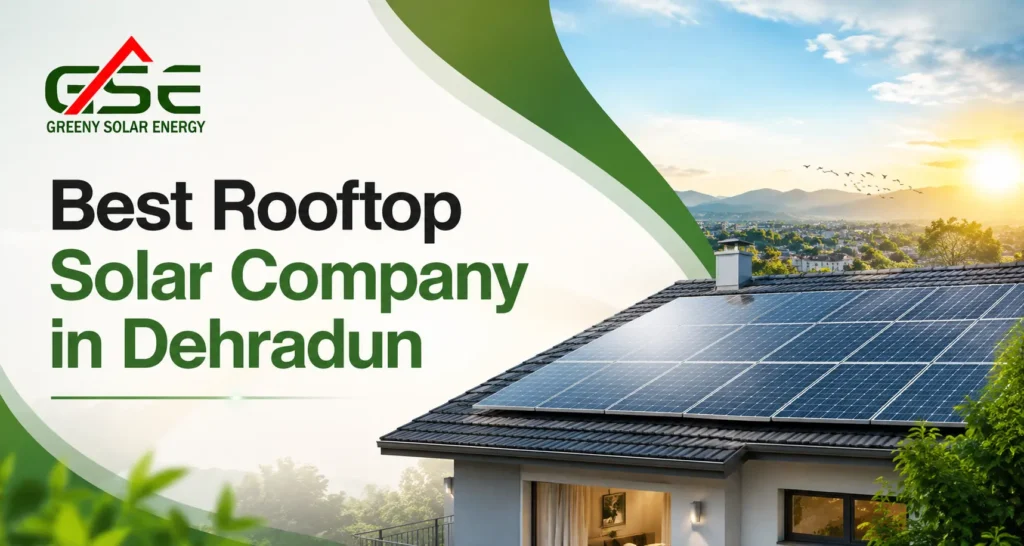
Best Rooftop Solar Company in Dehradun
Solar Panel

Best Rooftop Solar Company in Dehradun: Cost, Benefits & Installation Guide

Best Rooftop Solar Company in Dehradun: Cost, Benefits & Installation Guide If you’ve opened your electricity bill in Dehradun over the last couple of years and felt a small jolt of panic, you’re not alone. Power tariffs across Uttarakhand have been creeping upward, and for homeowners, hoteliers, school administrators, and small factory owners alike, the monthly bill has stopped being a minor line item and started becoming a genuine budgeting concern. That’s precisely why rooftop solar has moved from “nice-to-have eco upgrade” to “obvious financial decision” for a growing number of households and businesses across the Doon Valley. Walk through neighbourhoods like Rajpur Road, Vasant Vihar, or the outskirts near Premnagar today, and you’ll notice solar panels glinting on more and more rooftops — homes, guesthouses, coaching institutes, even small manufacturing units. The shift isn’t accidental. Between falling equipment prices, strong government subsidies, and Dehradun’s genuinely favourable sunlight patterns, the economics have finally tipped in solar’s favour. But here’s the catch nobody tells you upfront: the panels themselves are only half the story. The other half — arguably the more important half — is who installs them. Picking the Best Rooftop Solar Company in Dehradun determines whether your system runs flawlessly for 25 years or becomes a source of endless complaints, subsidy delays, and underperformance. This guide walks through the real costs, the genuine benefits, and exactly how to choose an installer you won’t regret. Why Rooftop Solar Is Becoming Popular in Dehradun Increasing Electricity Bills UPCL tariffs, like most state electricity board rates in India, have followed a steady upward trend, and Dehradun households are feeling it in both residential and commercial slabs. A family running a couple of ACs through the summer, a water heater in winter, and standard daily appliances can easily see bills swing between ₹3,000 and ₹8,000 a month depending on the season. Commercial establishments — hotels, banquet halls, small offices — often face bills several times higher. Solar doesn’t eliminate this overnight, but over a five-to-seven-year window, the savings compound dramatically, and after the payback period, the electricity your panels generate is essentially free for the remaining life of the system. Ideal Climate for Solar Energy Dehradun sits in a bit of a sweet spot climatically. It gets a healthy stretch of clear, sunny days for most of the year, and even though the hills bring some cloud cover during monsoon months, the overall solar irradiance is more than sufficient for a well-designed system to perform reliably. Panels don’t need scorching desert heat to work well — in fact, moderate temperatures paired with good sunlight hours (which Dehradun has in abundance outside the monsoon stretch) are actually ideal for panel efficiency, since excessive heat can slightly reduce output. Government Support This is where the numbers really start working in the homeowner’s favour. Under the PM Surya Ghar Muft Bijli Yojana, the central government now provides direct bank transfers of <cite index=”1-1,6-1″>₹30,000 for a 1 kW system, ₹60,000 for a 2 kW system, and a maximum subsidy of ₹78,000 for systems of 3 kW or larger</cite>. The scheme is structured in slabs rather than a flat per-kW rate, so <cite index=”4-1″>it’s calculated as ₹30,000 per kW for the first two kilowatts, and ₹18,000 for the third kilowatt, capping out at ₹78,000</cite>. On top of the central benefit, Uttarakhand residents can also avail net metering, which lets you export surplus daytime power back to the grid and offset your consumption at night — effectively turning your rooftop into a small personal power plant that settles accounts with UPCL on a net basis rather than a gross one. Benefits of Installing a Rooftop Solar System Lower Monthly Electricity Bills This is the benefit everyone cares about first, and rightly so. A correctly sized system can bring your grid dependency down to a fraction of what it used to be, sometimes reducing bills by 70-90% depending on your consumption pattern and system capacity. Excellent Return on Investment Unlike most home upgrades that simply cost money, solar pays itself back. With subsidy support and current tariff rates, most residential systems in Dehradun recover their net cost within four to six years. Everything generated after that is pure savings for the remaining two decades of the panel’s working life. Environment-Friendly Energy Every kilowatt of rooftop solar installed offsets a meaningful amount of carbon emissions annually — <cite index=”7-1″>roughly 1.5 tonnes of CO₂ per kW every year</cite>, which over a 25-year system life adds up to a genuinely significant environmental contribution, equivalent to planting dozens of trees each year. Low Maintenance Solar systems have no moving parts to speak of. Occasional panel cleaning and an annual inspection are usually all that’s required to keep output steady — a stark contrast to generators or other backup power equipment that demand constant upkeep. Increased Property Value A functioning rooftop solar system, complete with proper documentation and net metering, is increasingly seen as a value-add during property resale — buyers recognise it as a running cost saver rather than a cosmetic feature. Rooftop Solar Installation Cost in Dehradun Factors Affecting Solar Cost No two rooftops are identical, so no two quotes should be either. The final price you’re quoted depends on: Roof size and orientation — larger, unobstructed, south-facing roofs are cheaper to work with than fragmented or shaded spaces. Panel quality — monocrystalline panels cost more upfront than polycrystalline but deliver better efficiency, especially on limited roof space. Inverter brand — string inverters versus microinverters, and the reputation of the manufacturer, both influence pricing and long-term reliability. Structure type — RCC roofs are generally simpler and cheaper to mount on than tin sheds or sloped tile roofs, which need custom structural work. Installation complexity — cabling length, elevation, and the number of obstructions (water tanks, chimneys, staircases) all add to labour cost. Approximate Cost Table System Size Suitable For Approximate Cost (Before Subsidy) 1 kW Small Home ₹65,000 – ₹75,000 2 kW Medium Home ₹1,20,000 – ₹1,35,000 3 kW Family Home ₹1,85,000

Solar Panel

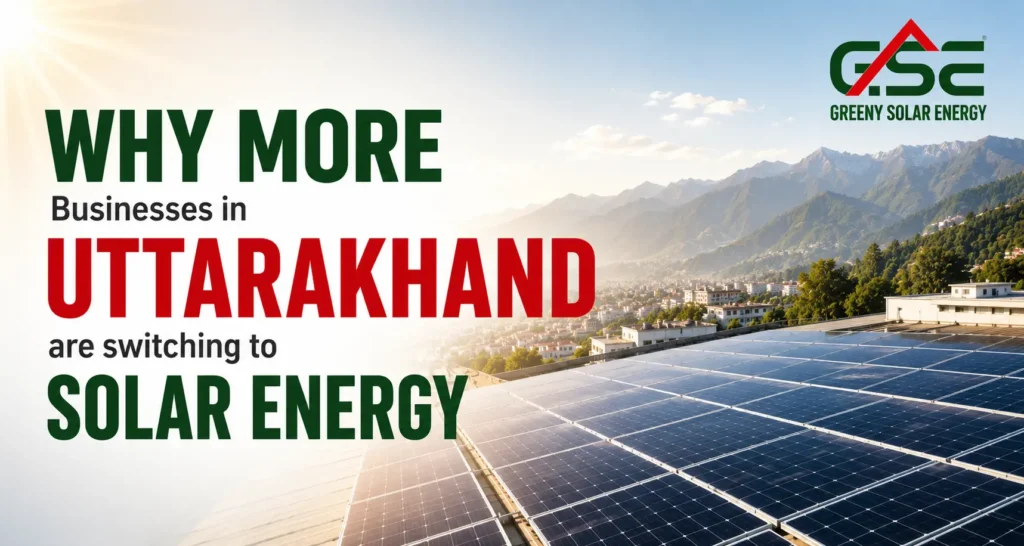
Why More Businesses in Uttarakhand Are Switching to Solar Energy Solutions

Walk through the industrial belts of Haridwar, the college roads of Roorkee, the market lanes of Haldwani, or the busy commercial hubs of Dehradun, and you’ll notice something new popping up on rooftops — solar panels. What was once seen as an expensive, “nice-to-have” upgrade has quickly become a smart, necessary business decision across Uttarakhand. From small shop owners to large manufacturing units, businesses are realizing that rising electricity bills, frequent power cuts, and growing environmental responsibility are pushing them toward a cleaner, more reliable source of power. And at the center of this shift is one name trusted by hundreds of homes and businesses — Greeny Solar Energy. In this blog, we’ll break down exactly why businesses across Uttarakhand are making the switch, and how choosing the right partner for Solar Energy Solutions in Uttarakhand can make all the difference. 1. Rising Electricity Costs Are Hurting Business Margins Commercial electricity tariffs have been climbing steadily across Uttarakhand. For businesses running machinery, cold storage, air conditioning, or extended working hours — like factories in Haridwar’s industrial estates or hostels and coaching institutes in Roorkee — power bills often eat into profit margins significantly. 2. Frequent Power Cuts Disrupt Daily Operations Anyone running a business in Haldwani or the outskirts of Dehradun knows the frustration of sudden power outages — especially during monsoon season or peak summer load. For businesses that depend on continuous power (bakeries, printing presses, clinics, IT offices, retail stores), even a short outage can mean lost revenue and unhappy customers. Solar systems, especially those paired with battery backup or hybrid inverters, give businesses much-needed independence from grid instability, ensuring smoother day-to-day operations. 3. Government Incentives Make Solar More Affordable Than Ever Uttarakhand, along with central government schemes, offers subsidies and net-metering benefits that significantly reduce the upfront cost of installing solar systems. Businesses that were once hesitant due to installation costs are now finding solar far more accessible — provided they work with an experienced provider who can guide them through subsidy paperwork, net-metering approvals, and local discom requirements. This is exactly where professional Solar Services in Uttarakhand become valuable — a good installer doesn’t just fix panels on your roof, they handle the entire process from design to documentation to after-sales support. 4. Businesses Want to Build a Sustainable, Eco-Friendly Brand Image The biggest myth around solar is that it’s expensive. In reality, once installed, solar systems typically pay back their cost within 3 to 5 years, and continue producing free electricity for 20-25 years afterward. For businesses in Roorkee and Haldwani running on tight operational budgets, this long-term saving is simply too good to ignore. Why Location-Specific Expertise Matters Uttarakhand’s terrain and climate vary significantly — from the hilly regions near Haldwani to the plains around Haridwar and Roorkee. Panel angling, seasonal sunlight patterns, monsoon considerations, and local grid regulations all affect how a solar system should be designed. This is why businesses shouldn’t just install any solar system — they need solutions tailored to the region. Choosing an experienced local partner ensures your system is designed correctly the first time, avoiding costly mistakes and underperformance later. Why Businesses Choose Greeny Solar Energy If you’re a business owner in Dehradun, Haridwar, Roorkee, or Haldwani looking to make the switch, working with a provider who understands both the technology and the region is essential. Greeny Solar Energy has become a trusted name for Solar Energy Solutions in Uttarakhand, offering: Free site inspection and customized solar system design End-to-end installation — from panels to inverters to net-metering setup Assistance with government subsidies and paperwork Genuine, high-efficiency solar equipment Reliable after-sales maintenance and support For businesses searching for the Best Solar Panel Service in Dehradun, Greeny Solar Energy combines technical expertise with local market knowledge, ensuring your investment delivers maximum returns for years to come. Final Thoughts The shift to solar isn’t just a trend — it’s a practical business decision driven by rising costs, unreliable power supply, and a growing demand for sustainability. Whether you run a shop in Haridwar, a coaching center in Roorkee, a retail store in Haldwani, or an office in Dehradun, solar energy can significantly cut your operating costs while future-proofing your business. If you’re ready to explore how solar can work for your business, reach out to Greeny Solar Energy for a free consultation and site assessment. Make the switch today — because the sun doesn’t send you a bill Frequently Asked Questions (FAQs) How much can a business save by switching to solar in Uttarakhand? Depending on the size of the system and current electricity consumption, most commercial setups see a 70-90% reduction in monthly electricity bills, with the full system cost typically recovered within 3 to 5 years. Is solar a good option for businesses in hilly areas like Haldwani? Yes. With the right panel angling and system design suited to local sunlight patterns and terrain, solar works efficiently even in hilly and semi-hilly regions. This is why choosing an installer with local expertise matters. What is net metering, and do I need it for my business? Net metering allows businesses to send excess solar power back to the grid in exchange for credits, which can offset electricity costs during low-sunlight periods. It’s highly recommended for commercial setups and Greeny Solar Energy assists with the entire approval process. Does Greeny Solar Energy provide services in Haridwar, Roorkee, and Dehradun? Yes, Greeny Solar Energy provides complete Solar Services in Uttarakhand, including Haridwar, Roorkee, Haldwani, and Dehradun, covering site inspection, installation, subsidy assistance, and after-sales maintenance. How long does solar installation take for a commercial property? Depending on system size and site readiness, most commercial installations are completed within 1 to 3 weeks, including inspection, approvals, and final testing. Are government subsidies still available for commercial solar installations? Yes, several central and state-level subsidy schemes and net-metering benefits are currently available, which significantly reduce the upfront investment. Greeny Solar Energy helps businesses navigate the paperwork and eligibility requirements. What maintenance does

Scroll to Top